
Don't Let Your Basement Become a Pool: The Ultimate Sump Pump Guide
![[HERO] Don't Let Your Basement Become a Pool: The Ultimate Sump Pump Guide](https://cdn.prod.website-files.com/69baaeebf85409aac9803b3e/69be131a49433a9e383d7b43_pd-lifvjiEj.webp)
The Silent Guardian Under Your Floorboards
Most of the time, you probably don’t even think about your sump pump. It sits in a dark corner of the basement or crawl space, waiting for its moment to shine. But when the groundwater starts rising, that little machine is the only thing standing between you and thousands of dollars in repairs.
Think of your sump pump as the heart of your home’s drainage system. It doesn’t just "move" water; it proactively manages the water table around your foundation.
Sump Pump 101: The Basics of Staying Dry
So, how does it actually work? It’s simpler than you might think.
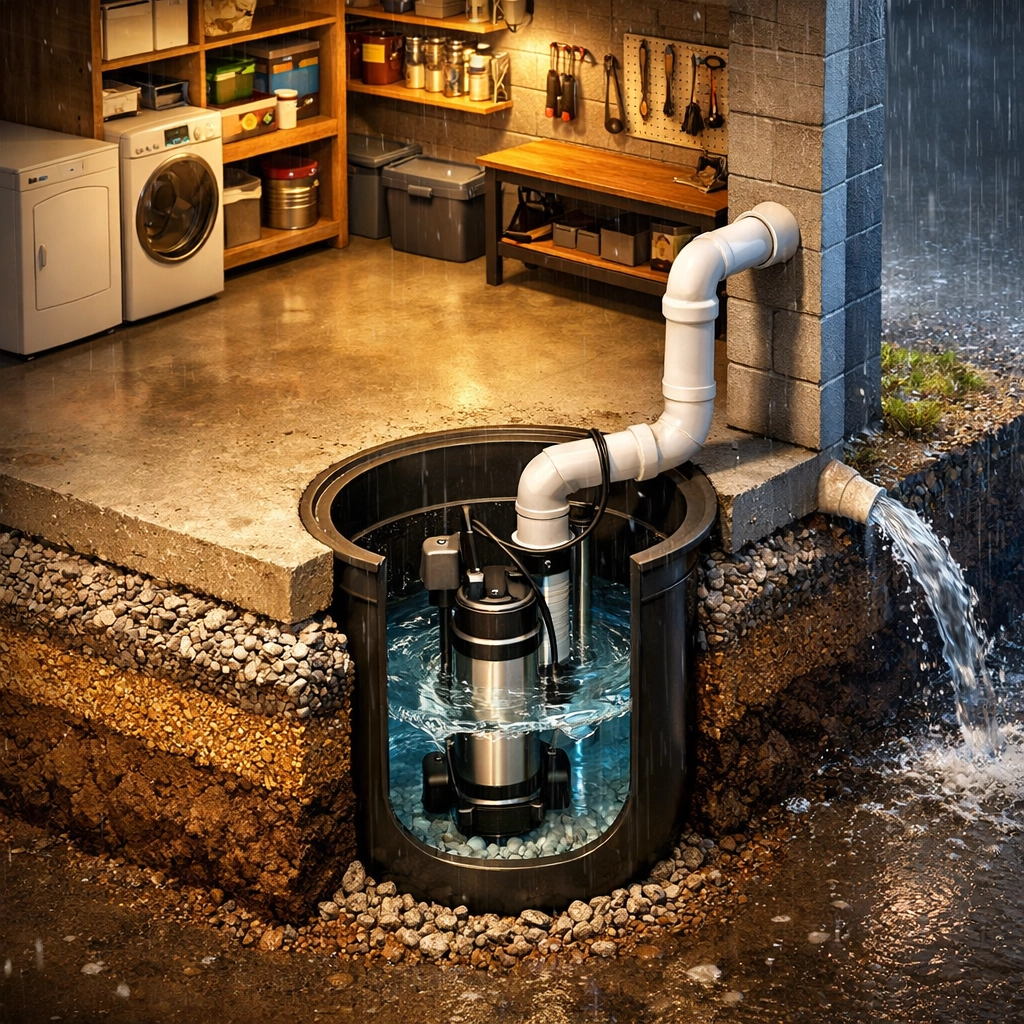
- The Sump Pit: This is a hole dug into the lowest part of your basement floor. It’s designed to be the easiest place for water to collect.
- The Float Switch: This works a lot like the mechanism in your toilet tank. As water fills the pit, a buoyant "float" rises. Once it reaches a certain height, it flips a switch that turns the pump on.
- The Pump: Once activated, the pump uses a spinning fan-like part called an impeller to create suction, pulling water out of the pit.
- The Discharge Pipe: The water is forced through a pipe that leads out of your house. Ideally, this pipe carries the water at least 20 feet away from your foundation so it doesn't just soak right back in.
- The Check Valve: This is a small but mighty part located on the discharge pipe. It’s a one-way door that lets water out but prevents it from flowing back down into the pit once the pump turns off.
Submersible vs. Pedestal: What’s the Difference?
When you’re looking at a new installation or a replacement, you’ll usually see two main types of pumps.
Submersible Pumps are the most common choice for modern homes. The motor is sealed in a waterproof housing and sits right inside the pit. Because they’re underwater, they tend to be much quieter. They’re great if you have a finished basement where you don’t want to hear a loud motor kicking on every ten minutes.
Pedestal Pumps look a bit different. The motor sits on a "pedestal" above the pit, while only the hose and float go down into the water. These are easier to service because the motor is right there in the open, and they often last longer because the motor isn't constantly submerged. However, they are louder and take up a bit more floor space.
Regardless of which one you choose, the goal is the same: keeping your socks dry.
5 Signs Your Sump Pump is Heading for Early Retirement
You don’t want to find out your pump is broken during a thunderstorm. That’s like finding out your parachute doesn’t work after you’ve already jumped out of the plane. Keep an eye out for these five warning signs that your sump pump is struggling.
1. It’s Making Sounds Like a Rock Tumbler
Your sump pump should hum, not scream. If you hear grinding, rattling, or loud thumping, something is wrong. Usually, this means there's a problem with the impeller or a bearing is shot. If the motor is working harder than it should, it’s only a matter of time before it burns out completely.
2. It Never Knows When to Quit (Or When to Start)
If your pump is running constantly, even when it hasn’t rained in days, your float switch might be stuck. On the flip side, if the pit is full of water and the pump is sitting there doing nothing, that’s a major red flag. Often, the pump has shifted in the pit, causing the float to get caught against the side.
3. It’s Been There Since the House Was Built
Most sump pumps have a lifespan of about 7 to 10 years. If you can’t remember the last time it was replaced: or if it looks like a rusted relic from a shipwreck: it’s time for an upgrade. Don’t gamble your basement on a machine that’s past its prime.
4. The "Vibe" is Off (Excessive Vibration)
If the pump vibrates so hard that it’s physically moving around in the pit, the impeller might be bent or damaged. This imbalance will eventually destroy the motor. A healthy pump should feel steady and stable while it’s working.
5. It Only Works When It Feels Like It
Do you have to go downstairs and "jiggle" the pump to get it to start? That’s not a solution; that’s a disaster waiting to happen. Intermittent operation usually points to electrical issues or a failing switch.

Preparing for the Big One: A Storm-Ready Checklist
Before the next big weather system rolls through, take ten minutes to do a "dry run" (pun intended).
- The Bucket Test: Pour a five-gallon bucket of water into the sump pit. Does the pump kick on? Does the water level drop quickly? If so, you’re in good shape.
- Clear the Debris: Check the pit for any trash, dirt, or gravel that might clog the intake.
- Check the Exit: Go outside and make sure the discharge pipe isn't blocked by leaves, mulch, or ice. If the water can't get out, it's going to come right back in.
- The Battery Backup: This is the most important tip. Heavy storms often bring power outages. If the power goes out, your standard pump goes out too. A battery backup system ensures that your basement stays dry even when the lights go dark.
Why NextGen Plumbing is Your Best Bet for a Dry Basement
At NextGen Plumbing Company, we’ve seen what water can do to a home. It’s not just about the cleanup; it’s about the peace of mind. When you call us, you aren't just getting a guy with a wrench. You’re getting a team that cares about your home as much as you do.

We specialize in professional sump pump installations and repairs that are built to last. We don’t cut corners, and we don’t use "cheap" parts that will fail the first time it pours. We use high-quality, reliable equipment that can handle whatever the weather throws at it.
The NextGen 1-Year Workmanship Guarantee
We know there are plenty of plumbers out there, but we want to make your choice easy. That’s why we offer a 1-year workmanship guarantee on all our sump pump repairs and installations.
If we install it or fix it, we stand behind it. If something isn't right within that first year, we’ll come back and make it right: no questions asked. It’s our way of showing you that we believe in the quality of our work and that we value your trust. You can read more about what our customers think on our reviews page.
Ready to Safeguard Your Home?
Don’t wait until you’re standing ankle-deep in water to think about your sump pump. Whether you need a quick inspection to make sure you’re ready for spring rains, a battery backup installation, or a full pump replacement, NextGen Plumbing is here to help.
We keep things simple, transparent, and stress-free. No hidden fees, no complicated jargon: just honest plumbing from people who live and work in your community.
Is your sump pump ready for the next storm? If you’re not 100% sure, give us a shout today. We’ll come out, take a look, and make sure your basement stays a basement: and not a pool.
Check out our About Us page to learn more about our team, or head over to our FAQ if you have more questions about how we work. Let's keep your home dry together!